Recharge Sage: A Flowing Script Typeface Review
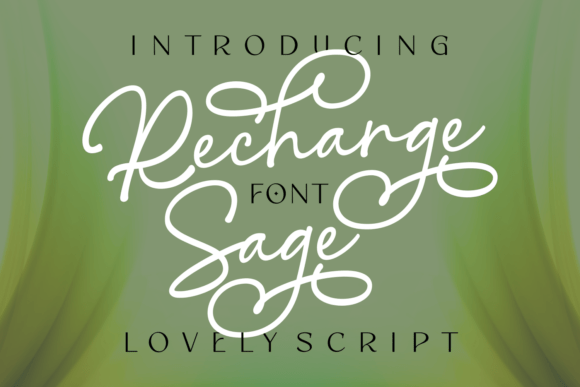
I was staring at a blank brand board for a new artisanal skincare line, feeling the familiar pressure of finding a logo that felt both organic and premium. I had cycled through three generic serif options and two stiff sans-serif choices, but nothing captured the "handcrafted" vibe the client requested. Then, I pulled up Recharge Sage. The moment I typed the brand name, the screen shifted. This isn't just another Script Handwritten font; it is a flowing script typeface with a beautiful, handcrafted aesthetic that immediately breathed life into the project. Its key differentiating feature is the dynamic and lively feel of its strokes, which appear to have been written with genuine energy rather than generated by a rigid algorithm.
Testing Recharge Sage on Logo Concepts and Brand Identity
When you first install Recharge Sage, the immediate reaction is often about how it handles the initial letterforms in a logo draft. In my testing, I used this Script Handwritten style to create a primary mark for the skincare concept. Unlike many Fonts that flatten out when scaled down or lose their character in a monolinear stroke, Recharge Sage maintained a distinct variation in thickness that mimicked real brush pressure. The way the loops connect feels intentional, creating a sense of movement that suggests the product is fresh and active. For a brand identity centered on natural ingredients and human touch, this specific typeface became the anchor. It didn't just sit on the page; it danced around the other design assets, pulling the viewer's eye directly to the brand name without needing heavy embellishments or drop shadows.
Using Recharge Sage for Packaging Design and Product Labels
One of the most critical tests for any creative font is how it translates from a digital screen to physical packaging. I placed Recharge Sage onto a mockup of a glass serum bottle label, pairing it with a clean, minimal background. The result was striking. Because the strokes are so lively, the text felt like it belonged on a high-end boutique item rather than a mass-produced shelf product. When reviewing the Script Handwritten category, many Fonts struggle with legibility on curved surfaces, but the flow of Recharge Sage adapts well to the contours of cylindrical bottles. The contrast between the dark ink and the clear glass highlighted the handcrafted aesthetic, making the product look expensive and carefully curated. It proved itself as a strong display font for short phrases, such as "Organic Glow" or "Hand Blended," where personality matters more than dense information.
Integrating Recharge Sage into Social Media Graphics and Web Headers
Digital presence requires typography that stops the scroll, and Recharge Sage excels in this environment. I tested the font in an Instagram story layout and a website hero section header. In the social media graphic, the dynamic strokes created a visual hierarchy that guided the user's eye from the headline to the call-to-action button. The lively feel of the script prevented the image from feeling static or overly corporate. On the website, I used Recharge Sage as a headline font paired with a neutral sans-serif for body copy. This combination ensured that while the header grabbed attention with its artistic flair, the rest of the content remained readable. For designers looking for modern typography that bridges the gap between personal branding and professional web design, this approach using Script Handwritten styles is highly effective. The font renders crisply on screens, ensuring that the delicate details of the strokes don't get lost on mobile devices.
Strategic Font Pairing with Serif and Sans Serif Styles
A common challenge with expressive scripts is knowing what to pair them with, but Recharge Sage offers a versatile canvas for experimentation. In my branding project, I found that pairing this flowing script with a geometric sans-serif created a perfect balance between tradition and modernity. The sharp angles of the sans-serif grounded the whimsical nature of the script, preventing the overall design from looking too frilly or outdated. Alternatively, a classic serif font worked beautifully to enhance the "handcrafted" vibe, suggesting heritage and quality. When selecting Fonts for a cohesive system, the goal is to let Recharge Sage shine as the accent or primary display element while the supporting typeface handles the heavy lifting of readability. Avoid pairing it with another script font, as the competing personalities can create visual noise. Instead, let the dynamic strokes of Recharge Sage lead the conversation while your secondary font provides structure.
Practical Limitations and Commercial Licensing for Recharge Sage
While Recharge Sage is a powerful tool, it is not a one-size-fits-all solution. As a designer, I must note that this typeface is best suited for headlines, logos, and short decorative phrases. Due to the intricate nature of the strokes, it may become difficult to read if used for long paragraphs of body text or at very small sizes, such as fine print on a contract. It is also less suitable for formal corporate reports or industries requiring strict, impersonal communication. Before finalizing any client work, always review the included file formats and ensure you have the correct commercial license. Whether you are designing for a local bakery, a freelance portfolio, or a large e-commerce brand, understanding the licensing terms for Script Handwritten Fonts is essential. Check if the license covers webfont usage, merchandise printing, or unlimited end-user applications. By respecting these boundaries and using Recharge Sage within its strengths, you ensure a professional outcome that respects both the design integrity and legal requirements of the industry.